Your cart is currently empty!
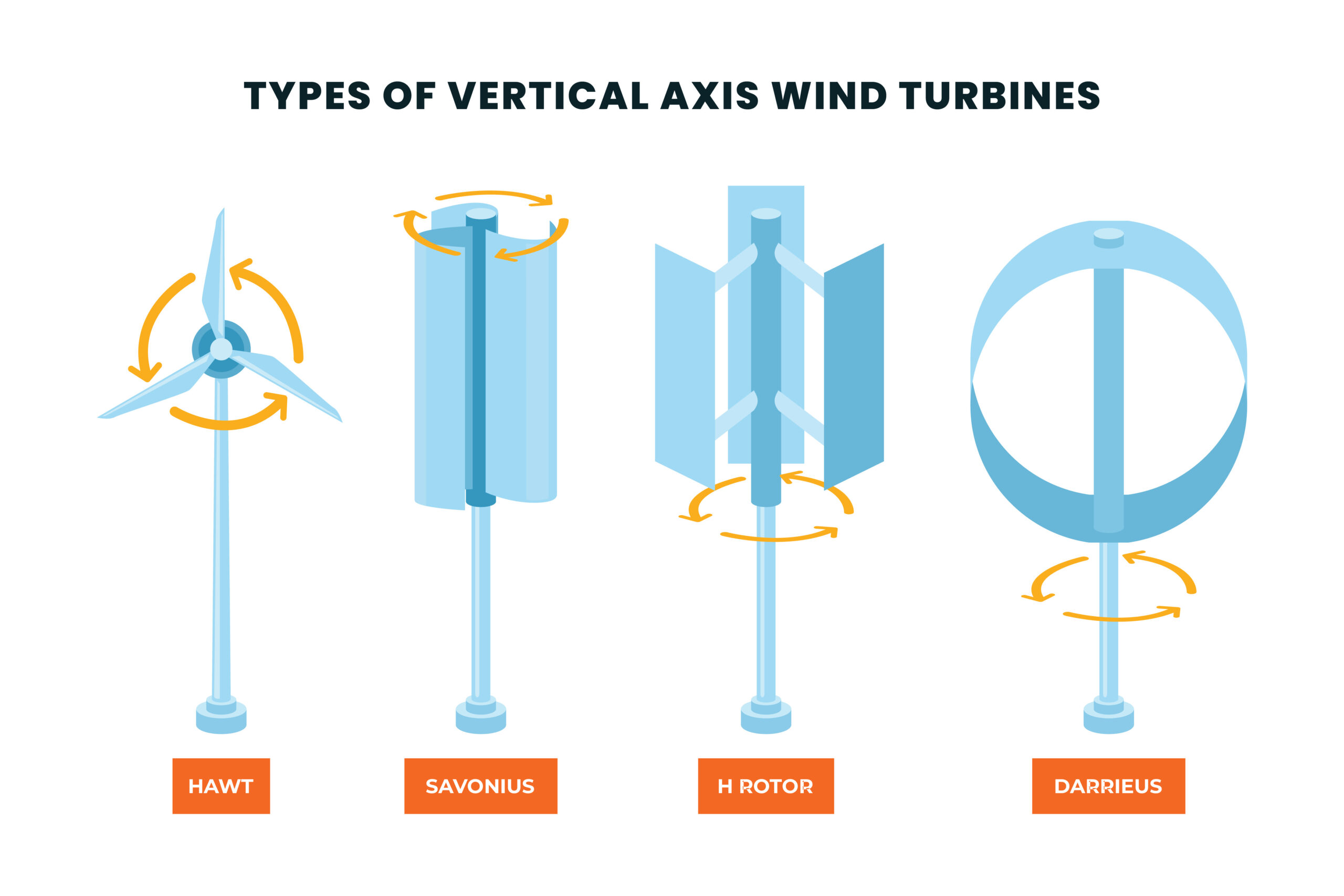
Rotor types for vertical wind turbines:
Alongside the Darrieus rotor, there are several other rotor types for vertical wind turbines, each with its own advantages, disadvantages and applications.
- Savonius rotor:
The Savonius rotor is characterised by its simple design and robust construction. It consists of two semicircular blades arranged around a vertical axis and driven by wind pressure. The Savonius rotor is particularly effective at low wind speeds and is well suited to urban areas or building rooftops. - Giromill rotor:
The Giromill rotor resembles the Darrieus rotor, but consists of several vertical blades rotating around an upright axis. This design makes efficient use of wind from different directions and is particularly stable. The Giromill rotor is suitable for medium to high wind speeds and is used in rural areas and coastal regions. - H-rotor:
The H-rotor consists of two vertical bars with horizontal blades attached. This design allows a high energy yield and is well suited to steady, strong winds. An H-rotor can also be installed on a tower together with solar panels to ensure continuous electricity generation. - Helical rotor:
The helical rotor is characterised by spiral-shaped blades that twist around a vertical axis. This design makes efficient use of wind from all directions and minimises turbulence. It is particularly suitable for areas with changing wind directions and unpredictable wind conditions.
Each rotor type offers specific advantages and can be selected according to local conditions and project requirements. By choosing the appropriate rotor type, operators can maximise the output of their vertical wind turbines and ensure reliable electricity generation.
Leave a Reply
You must be logged in to post a comment.